LIVING THINGS: ANIMALS
Do you remember Vertebrates and Invertebrates?
- Vertebrates: Animals with backbone. There are 5 groups of vertebrates. Fish, reptiles, birds, mammals and amphibians
- Invertebrates: Animals with no bones. There are many groups of invertebrates, but the most known are: Insects, arachnids, molluscs, crustaceans, protozoa,...

Vertebrate nutrition
Animals cannot make their own food and they obtain energy by eating other living things, so they care called CONSUMERS
CONSUMERS can be:
Carnivores: They eat meat.
Herbivores: They eat plants
Omnivores: They eat meat and plants.
Do you want to play? Click here and guess the diet of the animals

Vertebrate breathing
All animals need to take oxigen.
- Mammals, birds and reptiles take oxygen from the air. Air passes into the lungs. Waste carbon dioxide leaves the body through the lungs.
- Fish take in oxigen from water. Oxygen is absorbed into the blood through capillaries in gills.
- Amphibians take in the oxigen from water through the gills. During the metamosphosis, the gills close and they develop lungs. Adult amphibians can also absorb oxigen and expel carbon dioxide through their moist skin
Vertebrate reproduction
Animals are born, they grow, they reproduce and they die.
Animals can be oviparous, viviparous and ovoviviparous.
- Oviparous animals: Birds, fish, reptiles and amphibians are oviparous animals. The embryo grows inside the egg. The egg contains all the nutrients it need to grow.

- Viviparous animals: Mammals are viviparous. The embryo develops inside the mother. All babay mammals drink their mother's milk.

- Ovoviviparous animals: These animals produce eggs but the eggs develop and hatch inside the mother. Later, the mother gives birth to the baby. The tiger shark is ovoviviparous.

Revision
1.
Correct
the following sentences:
- -
A mammal is born from eggs.
- A
mammal is born from the mother’s womb
-
Birds have their body covered with
scales.
___________________________________
-
Vertebrate groups are: mammals,
birds, reptiles, amphibians and worms
-
________________________________________
-
An animal that only eats plants is
called carnivore.
-
______________________________________
-
Mammals have their body covered with
feathers.
-
_______________________________________
-
Omnivore animals are those who eat
meat.
-
______________________________________
-
Mammals, birds and fish breath
through the lungs
-
_______________________________________
==========================================================================
1.- CHARACTERISTICS


==========================================================================
INVERTEBRATES
MAKE THE FOLLOWING QUIZ BY CLICKING HERE
Invertebrates all share one
characteristic – they do not have a backbone.
We can classify invertebrates
into six groups:
1. Arthropods,
2. Molluscs,
3. Echinoderms,
4. Worms,
5. Sponges and
6. Cnidarians.
1. ARTHROPODS
This is the largest
invertebrate group. All arthropods have an external skeleton
called an exoskeleton. Inside this group we find:
a) INSECTS
b) CRUSTACEANS
c) MYRIAPODS
d) ARACHNIDS
A) . Insects have three body parts:head, thorax and abdomen
All
insects have two antennae and three pairs of legs (6
legs) which are joined to the thorax. Most insects have one or two
pairs of wings.

B). Crustaceans have
two body parts: cephalothorax and abdomen.
Their exoskeleton is
very hard, like a shell.
They have five pairs of legs but the
front pair of legs has claws.
They also have four
antennae.

C) Myriapods have long, thin, segmented bodies.
They have many pairs of legs and two antennae.
They live in dark, damp places.
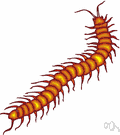

They have many pairs of legs and two antennae.
They live in dark, damp places.
D). Arachnids have two body parts:
- cephalothorax
- abdomen.
The cephalothorax is made up
of the head and the thorax.
They have four pairs
of legs and up to eight eyes.
2.- MOLLUSCS
Molluscs are another large group of invertebrates. There
are three subgroups:
- Gastropods: 1 shell. SNAIL
- Bivalves: 2 shells. OYSTER
- Cephalopods: No shell. SQUID


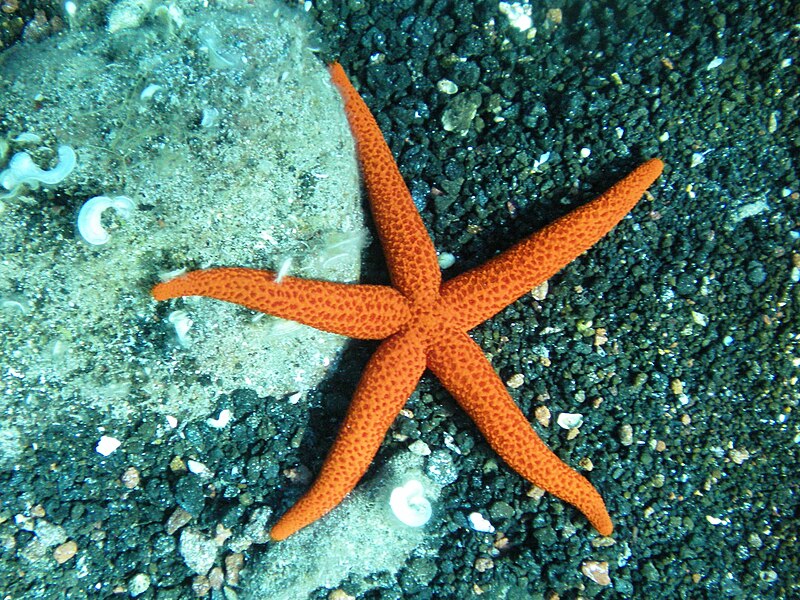
3.- ECHINODERMS
They live at the bottom of the sea. Starfish are
echinoderms.
4.- SPONGES.
They live in water. They have no muscles, nervous
system or circulatory system.


5. WORMS
They have a long, soft
body with moist skin.
Most of them live in water, but they
can also live on land.


6. CNIDARIANS
They live in the sea. They have a soft, jelly-like body with
one opening.
This opening is surrounded by venomous tentacles.
Jellyfish and sea
anemones are cnidarians
/184795480-56a006265f9b58eba4ae8afa.jpg)
AND WE VISITED GUADALAJARA´S ZOO


Very Easy
ResponderEliminar:V
ResponderEliminarXDDDDDXDXDXDXD
EliminarHOLA SOY TRUJI XDDDDDDDD
EliminarWhy you see this
ResponderEliminarmaximmm xdddd
EliminarOK IS EASI
ResponderEliminarrip
ResponderEliminarnel XD
ResponderEliminar